HISTORY REPEATS ITSELF AGAIN

one of my art history books found at a sale that I’ve been reading through. It will join the others to go to Half Price books later.

People often buy books like this for the coffee table and don’t bother to read them unless they’re taking a class and it’s a textbook. It doesn’t read like a text book but has some interesting text that applies to the world societies we live in today, and I don’t mean just about art. One interesting item I found happened in the Early Chou Dynasty, c. 1100 b.c.-256 b.c. During the warring states period of 403-221.

“The rich began to gather huge landholdings, forcing the poor to become landless tenants. As warfare among the states increased, taxes rose to unbearable heights of 50% or more; many tenant farmers owing more than they could produce escaped to join indigent, non-productive, and disruptive elements. (p. 42).

Homeless camps can be seen not only in America, other countries around the world too are suffering this growing crisis.

There is a long list of blames for the reason these encampments are seen in basically every city. It began with the opioid crisis and bad tenants, soft government and the tanking values of commercial properties sending investors into the residential markets. With the growing number of short term rentals catering to tourism and nomad workers, such as those who can work from home or anywhere, has contributed tremendously to this crisis. As I travel around my own metro area and witness the growing suburban landscape stretching out beyond the farthest suburbs, Urban Sprawl. I notice the mega apartment buildings, townhome communities and new neighborhoods of single family homes all have one thing in common for these new home owners, Home Owner Associations, (HOA’s)

All HOA’s charges each family a monthly fee on top of their mortgage payments. This fee can be low or high and is often increased over time. Most people are convinced these HOA’s are in place to protect the homeowner’s home values and keep the neighborhood nice, but they’re really dictating conformity and ousting diversity and individualism. I lived in a coop and we too had rules to prevent problems, the rules were simple and made sense. Though we were all renters at the time we tenants were allowed to plant gardens front and back, allow our visitors to park in front on the street or in our driveway or a designated spot in a lot, and we were allowed to paint our property in colors of our own choosing, etc. HOA’s dictate everything you do and I find them extremely intrusive. HOA’s usually have a management company of sorts handling the money collected and leaving homeowners with next to nothing in return. In a coop, there too was a management company, but members also managed the properties and there was a process for complaints when another member broke the rules and disturbed other people. Everyone had a right to see the books, what is in the bank and what the money was spent on. We got whatever we were paying for. No one is allowed to impose on another neighbor their own “standards”, such as is a common thing in HOA’s. However too many people believe that the coop concept is communist!

A homeowners coop could easily offer affordable homeownership and eliminate the management company and all other middlemen. Coop members manage the properties themselves through various committees. They could eliminate the HOA fees but ask homeowners to pitch in or volunteer in the upkeep of common property, maybe require a small fee to keep in trust for expenses of common areas. Form workshops that offer classes on “do it yourself” home maintenance and more. Create community gardens that grow produce and anything else to benefit members. The ideas are endless.

What I see in HOA’s is a gimmick to keep home owners paying something to the landowners or developers for many years beyond their mortgages. Who actually owns these management companies, probably not the small business guy. Not all people are dissatisfied with their HOA, but the trend these days is moving toward normalizing these fees into our daily lives and as in nearly everything that starts out small and friendly, grows into a very large and dissatisfying beast. I can testify to that personally with all the small start up companies I have worked for in the past, as they grew and took on more people, they began chipping away at all the perks and benefits I had earned. They don’t appreciate you and all the work you’ve done and are still doing to contribute for their success. Remember, it’s Their success, not yours!

People say to vote for change, but we need to do more than vote. We can vote for anybody and nothing changes, but if we take to the streets that drives our messages into the skulls of the powers that be. They need us, we don’t need them! Maya Angelo said in her book, “The Heart of a Woman” a piece of advice her African husband told her before she set out to enter a building where there was a protest going on. He told her if things got scary not to trust the assistance of somebody of the middle class because they are scared of losing whatever they have, but to trust the somebody who looks like they don’t have anything to lose and color means nothing in these situations. She took his advice and was successful in entering that building unmolested.

Boycotting capitalism itself is a start as this system has grown into the disparity we are all becoming more familiar with today. Nothing is going to change unless everybody stops spending their money on new stuff. Unfortunately, we know that’s not going to happen.
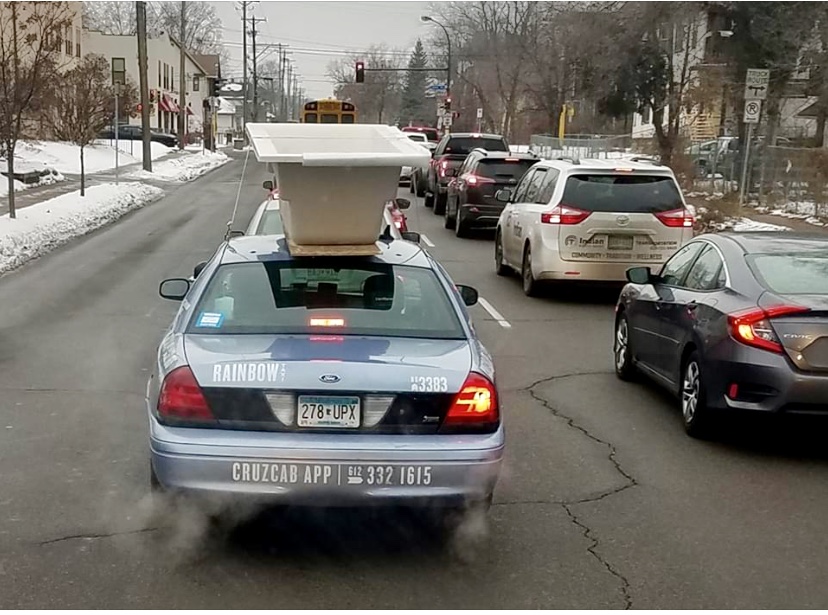
MOVING TIME IN MINNEAPOLIS?

As the people around the city and even surrounding areas are concerned about the threat of Uber/Lyft leaving Minneapolis over the controversy of the city council’s belief in “minimum wage” and ability to over ride vetos from the mayor and the governor, I would like to help by enlightening people to one of the elements that brought this to the point of where it is now. Cheap!

With the media coverage about anti-tipping the public in general turned against tipping. This trend seemed to have started with the early days of Uber who claimed that a 20% gratuity would be added to the fares charged customers and then that’s all they would take of the fare from the drivers. Well, that’s not true anymore. Since then customers can scroll down and choose a tip in the app, but cash is still King. However, customers are not tipping and helping to make up the incomes of drivers, nor other servers for that matter. In order to keep prices low, tipping is a necessity. Restaurant servers have told me that if tips were eliminated and they were only paid the minimum wage to do their job, they’d quit. I used to waitress and the wages for wait staff was well below minimum wage, but I came home with a lot more money in my pockets than any minimum wage would’ve paid me. The kitchen staff often envied this because they only were making a wage but somehow there was a law or ordinance passed that prevented restaurants from demanding a small percentage of tips to contribute to the staff in the kitchens. Waitresses are often young and pretty and age out of the occupation or move on to other venues such as diners and truck stops that don’t pay in tips as well. It’s not considered a profession.

Remember the days starting in the early 1980’s (if you were around then) when companies first began moving out of the country and made the claim that the U.S. economy was going to be a service economy?

I remember that well. I also remember the beginnings of the “gig” economy that was back then called “independent contractors” and many companies jumped on that bandwagon in the early 1980’s too. This “Gig” economy is growing as more workers are jumping on the bandwagon. What are the advantages? The freedom to work whenever you want or need to, be your own boss, own your own business! However we’re still dependent on a main source or company for our business. We’re not entrepreneurs creating anything new, even the independent car services, calling themselves limos most often began working for another company, usually a taxi company, and poaching business from there before striking out on their own.

The original manuscript for this book is unknown, but was first published in China in 1937. The translation edition here dates to 1945.

This story describes the life of the equivalent of today’s taxi and Uber/Lyft drivers and to also include the lives of all gig workers to come. When people like what they’re doing, they tend to keep doing it even though it may not be any good for them in the long run, however, they’re still working and eking out a living. Drug addicts do this that’s why they go on to becoming addicts in the first place, autistic adults are only now becoming apparent and autism has a wide spectrum so most people who are autistic don’t know they are and neither do people in general outside the mental health community. Drivers aren’t just stupid, they’re stuck in the rut for a reason. The future they don’t see is very bleak. At the same time companies have this upper hand and though employers have responsibility to their employees, something our past generations have fought very hard to make into law, such as minimum wages, anti-child labor laws, workers compensation, unemployment insurance and pensions. All of which companies avoid by making their employees “independent contractors” and boosting the egos of these employees with words like, “be your own boss”, etc. It’s time for all gig workers to rise up and figure out what is going to work to protect all of our futures.

Gig workers do not have wages, we are not paid by the hour, we do not have benefits that every other worker has. We have to make our own through savings and IRAs. We pay for our own expenses. There is no responsibility of any company to protect us by law. The city of Minneapolis is not going to change this by demanding Uber/Lyft to pay a minimum wage. In fact it was the city council that ousted the owners of Yellow taxi from the city in 1982 by not working something out when Yellow lobbied for leasing rather than the commission they were then paying drivers, which was generally a 60/40 split with Yellow taking the 60% of the fares and paying all expenses including employee coverage of all responsibilities of employers. Drivers made a middle class income, were able to buy their own homes, support their families, and even save for a pension through an employer’s plan. The city council took that away from taxi drivers in 1982. So what are they going to do now, re-invent the wheel? Bring back the taxis? I have another whole blog about the taxi companies and their operations and political entrenchments. Uber/Lyft actually made things better for all drivers.

On one hand, I don’t blame the drivers who lobbied their complaint that Uber/Lyft aren’t paying enough. Over time, like everybody else, taxi companies included, have pecked away at the earnings of the people who do the work for them. They only offer an endless string of excuses to disguise their greed. Once they build up what they strived for, which is an over abundance of workers, then they began their pecking away at the earnings. It’s nothing new and we’ve all experience it in some form. What at first was overtime and the tantalizing offers of overtime pay, is now taken for granted as workers find themselves working overtime every week just to make expenses. They also continue to raise the age of retirements claiming the people are living longer. Who’s living longer, the privileged? Not the average worker who’s become tired and worn out, maybe a few survive to old age.

Remember when most recently after the Covid 19 pandemic, workers began demanding more wages, what did a lot of companies, big and small, say? If they had to pay more in wages then they’re going to raise prices. And they did just that with the excuses of “chain supply problems” etc. Now they’re squawking about shipping problems by sea. All of which could have been avoided in the first place if they hadn’t slung their manufacturing hooks out of the country and just kept wages up with inflation. Consumer too contribute to this with all the frivolous shopping and demand. People in general are cheap and they want to stay cheap without feeling that they are cheap, so all this anti tipping hype and even blurbs about the history of tipping originating from slavery, only gives cheap people an “opinion” making them feel that they’re contributing to an age old custom of oppression. The reality is, the service industry does depend on tips to keep prices low so generally anybody can afford the service because tips supplement the incomes of servers in order to keep restaurants, taxi’s, Uber/Lyft viable to the consumer to enjoy the luxury.

As I write this there is a fresh beef going on with China possibly overproducing and fear of undermining the cost of goods exported from China to consumers. Actually the companies themselves are in fear of the competition. They’re losing the upper hand they had when they first began exploiting the cheap labor in China, now they’re complaining?

Fear is still the driving factors in all this hype over China spying on us so we have to do away with TikTok. It’ll be Chinese business next, like Temu, etc. Just watch!